
An Introduction to Nettipattam
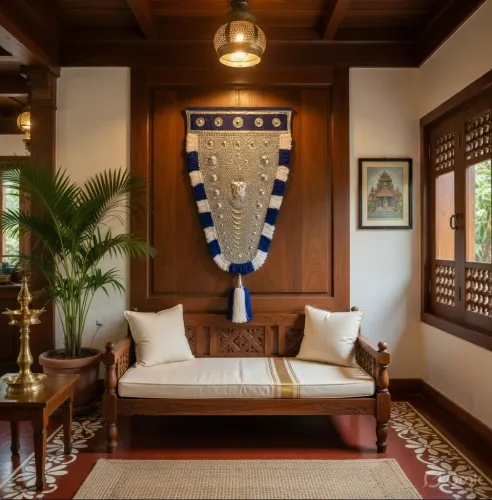
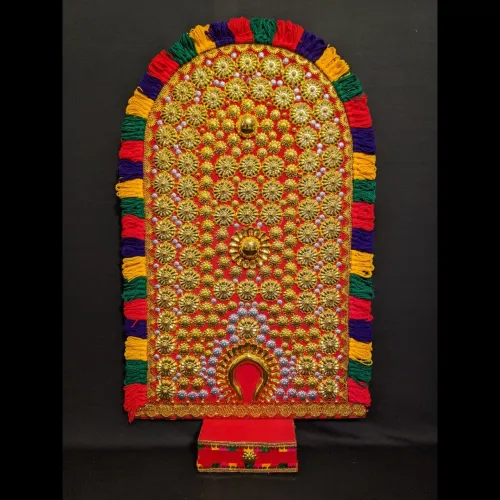
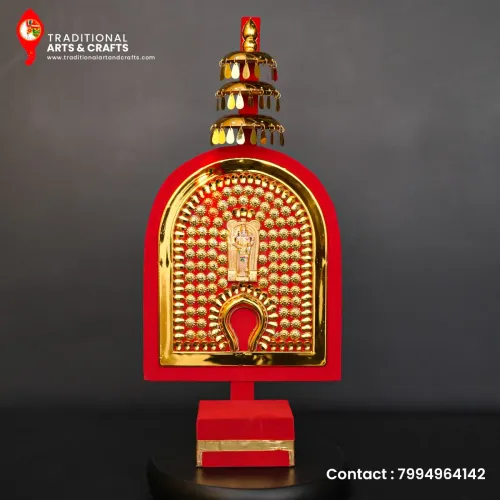
Nettipattam is a traditional wall-hanging unique to Kerala, India, renowned for its vibrant and ornate design. Nettipattams are used extensively as decorative elements in Hindu temples and homes, signifying both aesthetic beauty and religious significance.
Significance of Nettipattam
Beyond their decorative appeal, nettipattams hold religious importance in Hinduism. Mirrors are considered sacred as they reflect the light of the sun and moon, symbolizing divine presence. Nettipattams are traditionally hung near deities in temples or above beds and doorways in homes. This placement allows the mirrors to bless those who rest beneath them or enter through the doorways with their reflective light.
Types of Nettipattam
There are two primary types of nettipattam:
Kodakkal Nettipattam: This traditional form features a central disk that often displays an image of a deity or religious figure. Its design is more classical and revered for its religious connotations.
Thirumukham Nettipattam: A more contemporary version, the thirumukham nettipattam showcases geometric designs at its center instead of religious imagery. This modern take allows for more versatile decorative uses while still honoring the traditional craftsmanship.
Materials and Craftsmanship
Nettipattams are typically crafted from metals such as brass or copper, known for their durability and shine. The intricate designs are meticulously created, and the decorations often include beads and other embellishments.
Incorporating Nettipattam into Home Décor
For those looking to infuse their home décor with a touch of Kerala tradition, hanging a nettipattam is an excellent choice. Whether you opt for the traditional kodakkal or the modern thirumukham, a nettipattam can bring a unique and auspicious element to your living space.
Consider adding this beautiful and culturally significant piece to your home to enjoy both its aesthetic beauty and its spiritual blessings.
Keywords